60+ Years of Separation Expertise
Alfa Laval ALDEC — engineered with 60+ years of solid-liquid separation know-how. Genuine OEM products from authorized distributor.
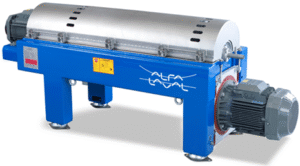
Decanter Centrifuge
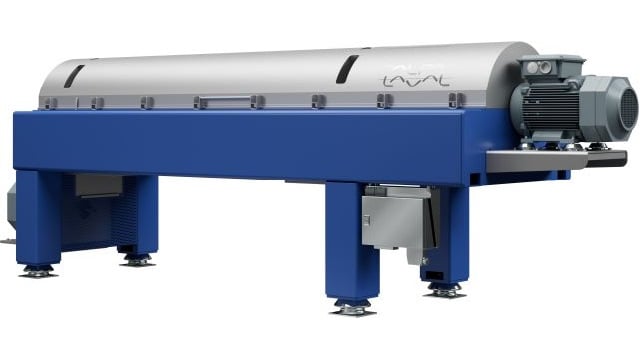
Alfa Laval — ALDEC SeriesAlfa Laval ALDEC decanter centrifuges are purpose-built for sludge thickening and dewatering in municipal and industrial wastewater treatment plants, potable water works, solid waste handling, and biogas plants. Focused on cost-efficiency, reliability, easy operation, and sustainability — ALDEC reduces sludge volume, cuts transport and disposal costs, and operates with minimal energy and labour.
Compact Modular Design
High capacity in a small footprint — saves valuable plant floor space.
Low Energy Consumption
High separation performance combined with minimal energy use.
Wear-Resistant Design
Anti-blocking feature and hardened wear parts for abrasive sludge.
Full CIP Cleaning
Completely enclosed cleaning-in-place (CIP) — no manual intervention needed.
ALDEC — Built for Sludge Thickening & Dewatering Excellence
Cost-effective sludge dewatering is crucial for removing water content from sludge in wastewater streams. The drier the sludge, the less space it takes up and the less it weighs — both resulting in significant savings on transport and disposal costs while meeting environmental regulations.
With more than 60 years of experience in solid-liquid separation, Alfa Laval has packed the ALDEC range with unique, proprietary technologies that no other manufacturer offers. These centrifuges are fully automatic, reducing labour costs while ensuring efficient, continuous processing.
Sludge Volume Reduction
Dramatically reduces sludge volume during thickening and dewatering, cutting transport and disposal costs significantly.
Fully Automatic
100% automatic operation reduces labour costs while ensuring consistent, high-efficiency sludge processing around the clock.
Low Operating Cost
Minimal installation, operating, and service life costs. High performance with industry-leading low energy consumption.
Proprietary Alfa Laval Technologies
Wear Protection for Conveyor Flights
Hard-wearing tiles welded to the conveyor provide robust resistance and prolonged uptime in highly abrasive applications.
Flow-Optimized Solids Outlet
360° outlet design ensures even discharge of solids, minimal resistance, and no blockages — even at high flow rates. Replaceable wear saddles maximize uptime.
Feed Zone with Wear Protection
Gentle product acceleration and minimal turbulence result in low abrasion and power consumption. Replaceable wear-protection liners for high uptime.
Spring-Loaded Hinged Cover
Patented spring-loaded hinged design makes it easy to open even the heaviest cover by hand — quick, safe access for maintenance and service.
High Separation & Energy Efficiency
Increased pond depth creates a larger volume and longer retention time — delivering high solids dryness and clean centrate even at high flow rates.
Enclosed Cleaning-in-Place
Completely enclosed CIP system enables full automated cleaning without disassembly — maintaining hygiene and maximizing operational uptime.
Technical Specifications
Typical parameters for the Alfa Laval ALDEC range. *Exact values vary by model — contact our engineers for a selection tailored to your flow rate and sludge characteristics.
| Product Range | ALDEC (Sludge Thickening & Dewatering) |
|---|---|
| Bowl Material | Duplex Stainless Steel (2205 / EN 1.4462) |
| Conveyor Material | Duplex SS with FlightGuard™ wear tiles |
| Design Speed (Bowl) | Up to 3,500 RPM |
| Centrifugal G-Force | Up to 3,000 G (model-dependent) |
| Sludge Flow Rate | 2 m³/h to 120 m³/h (model-dependent) |
| Cake Dryness (DS) | 18% – 35% dry solids (sludge-type dependent) |
| Centrate Clarity | < 200 mg/L SS (typical) |
| Motor Power Range | 4 kW – 90 kW (VFD driven) |
| Cleaning System | Fully enclosed automatic CIP |
| Control Interface | PLC with HMI touch panel; SCADA-compatible |
| Standards | CE, ISO 9001, ATEX (optional) |
Industries & Applications
The ALDEC range handles a wide spectrum of sludge types across multiple industries where solid-liquid separation is critical.
Municipal Wastewater Treatment
- Primary sludge thickening
- Digested sludge dewatering
- Mixed sludge (primary + WAS) processing
- Sludge volume reduction for disposal
Industrial Wastewater
- Food & beverage effluent dewatering
- Paper & pulp mill sludge treatment
- Chemical plant effluent processing
- Pharmaceutical waste sludge dewatering
Biogas & Renewable Energy
- Digestate dewatering in biogas plants
- Biomass concentration and recovery
- Fibre–liquid separation for biogas upgrading
- Nutrient recovery from digestate
Potable Water & Solid Waste
- Drinking water sludge dewatering
- Coagulation/flocculation sludge handling
- Leachate and landfill liquid treatment
- Solid waste plant effluent management
How a Two-Phase Decanter Centrifuge Works
Separation occurs in a horizontal cylindrical bowl fitted with a precision screw conveyor. The two-phase decanter simultaneously separates solids from liquid in a continuous, fully automated process.
Feed Entry
Sludge enters through a stationary inlet tube and is smoothly accelerated by an inlet distributor in the FeedProtect™ feed zone, minimising turbulence.
Centrifugal Sedimentation
High centrifugal force (up to 3,000 G) causes solids to sediment rapidly on the bowl wall while clarified liquid forms an inner pool (pond).
Conveyor Transport
The screw conveyor, rotating slightly slower than the bowl, continuously moves settled solids toward the conical end for discharge through the SolidsProtect™ outlets.
Dual Discharge
Dewatered cake exits through discharge openings into the casing. Clarified centrate exits separately through adjustable DeepPond™ outlet tubes — no cross-contamination.
Why ALDEC Outperforms Alternatives
Unlike belt filter presses or screw presses, ALDEC decanter centrifuges are fully enclosed, require no filter cloths, consume significantly less polymer, and deliver consistently higher cake dryness — even with variable sludge. The combination of DeepPond™ + FlightGuard™ + SolidsProtect™ means you get maximum performance with minimum maintenance intervention.